 EN
EN
Fleet managers and procurement teams responsible for maintaining large vehicle pools understand that steering system reliability is not optional — it is a baseline operational requirement. Among the many components that determine steering precision and vehicle safety, the tie rod end is one of the most mechanically stressed and wear-prone parts in the front axle assembly. When fleets operate dozens or hundreds of vehicles across demanding routes, the cumulative cost of premature tie rod end failure — in downtime, labor, and replacement parts — becomes a serious financial and safety concern.
Enhancing tie rod end durability across a fleet is not simply a matter of buying better parts, though component quality certainly matters. It requires a systematic approach that combines smart procurement decisions, disciplined maintenance scheduling, driver behavior awareness, and proper installation practices. This article explores the key factors that determine how long a tie rod end lasts in fleet conditions and what fleet operators can do to extend service life, reduce replacement frequency, and keep vehicles operating safely on the road.
Understanding Why Tie Rod Ends Wear Faster in Fleet Environments
The Mechanical Demands Placed on a Tie Rod End
A tie rod end serves as the critical link between the steering rack and the wheel hub, transmitting steering input and maintaining wheel alignment under dynamic load. In normal passenger vehicle use, this component experiences moderate stress. In fleet environments, however, the same tie rod end is subjected to far greater cumulative load cycles, often within compressed timeframes.
Fleet vehicles — whether light commercial vans, delivery cars, or utility vehicles — typically accumulate mileage two to four times faster than private vehicles. This accelerated usage means that every wear mechanism acting on the tie rod end operates at a proportionally higher rate. The ball-and-socket joint inside the tie rod end is constantly articulating, and the grease or sealed lubricant protecting it degrades with heat, contamination, and mechanical cycling.
When the protective boot surrounding the tie rod end joint cracks or tears, road grit, water, and corrosive debris enter the joint cavity. Once contamination reaches the bearing surface, wear accelerates dramatically. In fleet vehicles that frequently travel unpaved roads, construction zones, or urban environments with heavy road salt use, boot integrity becomes a primary durability factor.
How Fleet Operating Conditions Amplify Wear
Beyond mileage accumulation, the specific operating conditions of fleet vehicles create wear patterns that differ from typical consumer use. Stop-and-go urban delivery routes place repeated low-speed steering stress on the tie rod end, while highway fleets generate sustained vibration loads. Both patterns degrade the joint differently but with equal effectiveness.
Vehicles that regularly carry heavy payloads near or at their rated capacity place additional lateral stress on the front axle steering components. This load amplifies the force transmitted through the tie rod end during cornering and lane changes, accelerating joint wear and increasing the risk of play developing in the steering linkage.
Road surface quality is another compounding factor. Fleets operating in regions with poor road infrastructure, frequent potholes, or unpaved surfaces expose the tie rod end to impact loads that exceed normal design parameters. Over time, these shock loads fatigue the joint housing and can cause premature loosening even in otherwise well-maintained components.
Selecting the Right Tie Rod End for Fleet Applications
Material and Construction Quality Criteria
Not all tie rod end components are manufactured to the same standard, and the difference in service life between a quality part and a substandard one can be significant in fleet conditions. When evaluating tie rod end options for fleet procurement, material quality is the first consideration. The housing should be forged or precision-cast from high-strength steel, and the ball stud should be hardened to resist wear under sustained articulation.
The quality of the internal bearing surface and the type of lubricant used at the factory also influence durability. Pre-greased sealed joints eliminate the need for periodic re-greasing but must contain sufficient lubricant volume and a grease formulation suited to the operating temperature range of the vehicle. For fleet vehicles operating in extreme climates, verifying the lubricant specification is a worthwhile procurement step.
Boot material is equally important. A tie rod end boot made from high-quality thermoplastic elastomer or EPDM rubber resists cracking under UV exposure, temperature cycling, and mechanical flexing far better than lower-grade materials. Specifying boot quality as part of fleet procurement criteria can meaningfully extend the interval between replacements.
OEM Fit and Dimensional Compatibility
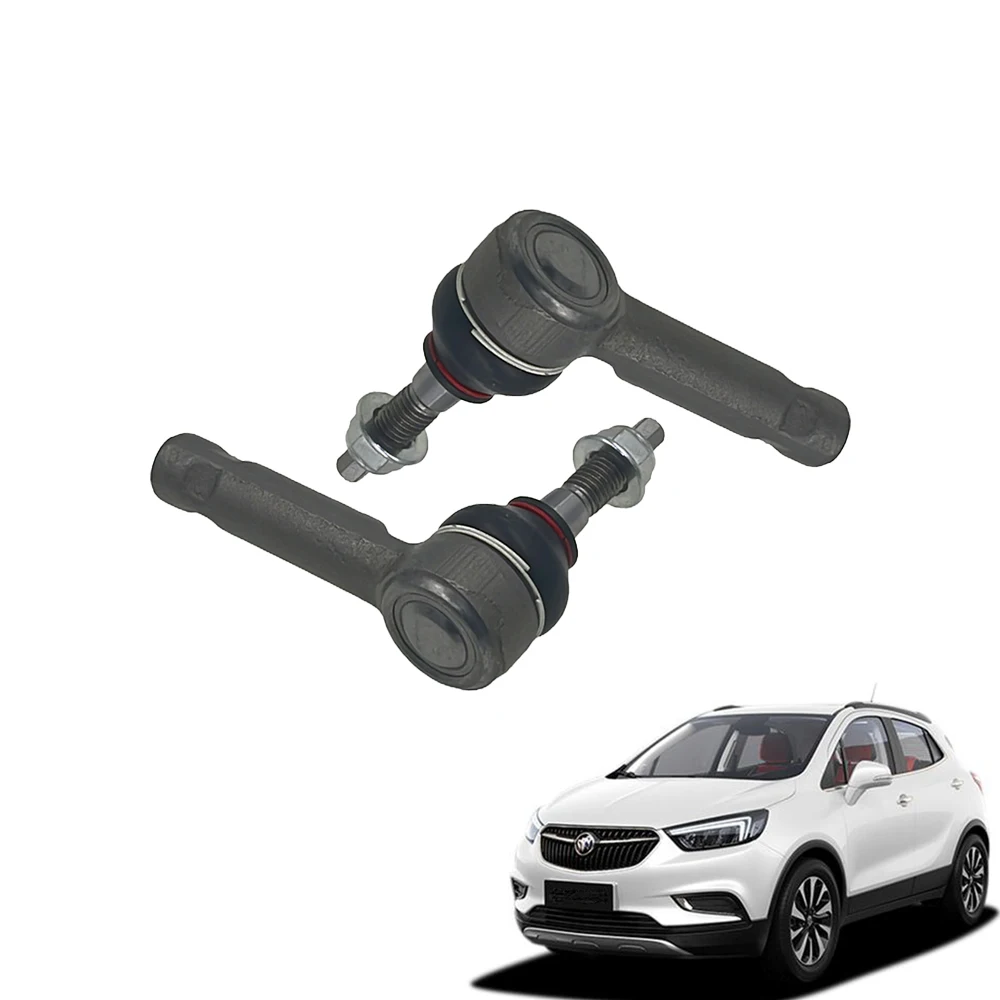
For fleet operators managing a standardized vehicle pool — such as a fleet of Buick Encore or Chevrolet Trax units — using tie rod end components that meet OEM dimensional and performance specifications is essential. Dimensional mismatches, even minor ones, can alter steering geometry, accelerate wear on adjacent components, and create alignment instability that shortens the effective service life of the replacement part itself.
Procurement teams should verify thread pitch, stud diameter, overall length, and torque specifications against the vehicle manufacturer's service data before approving a tie rod end for fleet-wide use. A part that fits correctly and aligns properly from the moment of installation will consistently outlast one that requires adjustment or compensation during fitting.
Standardizing on a verified, vehicle-specific tie rod end across the fleet also simplifies inventory management, reduces technician training requirements, and enables more accurate forecasting of replacement intervals — all of which contribute to lower total maintenance cost per vehicle.
Maintenance Practices That Extend Tie Rod End Service Life
Inspection Intervals and Early Detection
The most effective way to extend the functional life of a tie rod end in a fleet context is to detect wear before it progresses to failure. Establishing a consistent inspection interval — typically aligned with oil change or tire rotation schedules — allows technicians to identify early signs of joint looseness, boot damage, or corrosion before they become safety-critical.
During inspection, technicians should check for play in the tie rod end joint by applying lateral force to the wheel with the vehicle on a lift. Any detectable looseness in the joint indicates wear that warrants replacement. Boot condition should also be assessed visually; a cracked, torn, or collapsed boot means contamination has likely already entered the joint, and replacement should be scheduled promptly even if play is not yet measurable.
Documenting inspection findings per vehicle and tracking replacement history across the fleet enables maintenance managers to identify vehicles or routes that consistently generate accelerated tie rod end wear. This data supports targeted interventions, such as route adjustments, load management changes, or driver coaching, that address root causes rather than simply replacing parts on a reactive basis.
Alignment and Torque Compliance After Replacement
Proper installation practice is a durability factor that is frequently underestimated in fleet maintenance operations. A tie rod end that is installed without a subsequent wheel alignment check will often operate under misaligned conditions that accelerate wear on the new joint and on tires simultaneously. Every tie rod end replacement should be followed by a four-wheel alignment verification as a standard procedure.
Torque compliance is equally critical. The castle nut or self-locking nut securing the tie rod end stud must be tightened to the manufacturer's specified torque value. Under-torquing allows micro-movement that accelerates wear; over-torquing can damage the joint or distort the housing. Fleet maintenance facilities should ensure that calibrated torque tools are available and that technicians are trained to follow torque specifications consistently.
Using thread-locking compounds or anti-seize treatments where specified by the vehicle manufacturer also contributes to long-term joint security, particularly in environments where corrosion is a concern. These small procedural details, applied consistently across a fleet, accumulate into meaningful improvements in tie rod end service life.
Driver Behavior and Operational Factors That Affect Durability
Steering Habits and Their Impact on Joint Wear
Driver behavior has a measurable influence on how quickly a tie rod end wears in fleet service. Aggressive steering inputs, particularly at low speeds during parking maneuvers, place the joint at or near its maximum articulation angle and generate high contact stress on the bearing surface. Drivers who habitually steer to full lock and hold that position while maneuvering accelerate wear more than those who use smooth, moderate steering inputs.
Fleet operators can address this through driver training programs that include steering system awareness. While it is unrealistic to expect drivers to modify every steering habit, educating them about the mechanical consequences of aggressive low-speed steering and kerb impacts can produce measurable reductions in component wear rates across a large fleet.
Kerb strikes and pothole impacts are particularly damaging to the tie rod end because they transmit sudden shock loads directly through the joint. Drivers who consistently strike kerbs during parking or who fail to slow for road surface hazards generate a disproportionate share of tie rod end replacements in most fleets. Telematics data, where available, can help identify these patterns and support targeted coaching.
Load Management and Route Planning
Operating vehicles consistently at or above their rated payload capacity places chronic overload stress on front axle steering components, including the tie rod end. Fleet managers should enforce payload compliance as a maintenance policy, not just a regulatory requirement. Vehicles that routinely exceed their design load will wear tie rod end components faster regardless of part quality or maintenance frequency.
Route planning also influences tie rod end durability. Where operationally feasible, routing vehicles away from the most severely damaged road surfaces reduces the frequency of high-impact loads on steering components. This is particularly relevant for fleets operating in urban environments where road quality varies significantly between routes.
Seasonal considerations matter as well. In regions where road salt is used during winter months, the corrosive environment accelerates degradation of the tie rod end boot and housing. Increasing inspection frequency during and after winter seasons, and ensuring that undercarriage washing is part of the fleet maintenance routine, can meaningfully reduce corrosion-related failures.
Building a Fleet-Wide Durability Strategy for Tie Rod Ends
Standardization and Procurement Discipline
A durable tie rod end strategy at the fleet level begins with procurement discipline. Standardizing on a verified, vehicle-specific component across all units of the same model eliminates the variability that comes from sourcing parts opportunistically. When every technician in the fleet maintenance operation is working with the same part, installation familiarity improves, and the risk of fitment errors decreases.
Procurement teams should establish minimum quality criteria for tie rod end components, including material specifications, boot quality standards, and dimensional compliance requirements. These criteria should be documented and applied consistently when evaluating suppliers or approving alternative parts. The short-term cost savings from lower-grade components are typically offset by higher replacement frequency and increased labor costs over the fleet's operating life.
Maintaining a strategic inventory of tie rod end components for the fleet's most common vehicle models reduces downtime when replacements are needed. Balancing inventory carrying costs against the cost of vehicle downtime is a fleet-specific calculation, but for high-utilization vehicles, having replacement parts on hand is generally cost-effective.
Data-Driven Maintenance Planning
Fleets that track tie rod end replacement history by vehicle, route, and driver are better positioned to optimize their maintenance intervals and identify systemic issues. If a subset of vehicles consistently requires tie rod end replacement at shorter intervals than the fleet average, that pattern points to a specific cause — whether it is a particular route, a driver behavior issue, a payload compliance problem, or a vehicle-specific factor — that can be investigated and addressed.
Integrating tie rod end inspection and replacement data into the fleet's maintenance management system enables predictive scheduling rather than purely reactive replacement. When historical data shows that a specific vehicle model's tie rod end typically reaches the end of its service life at a certain mileage interval under fleet conditions, that interval can be built into the preventive maintenance schedule, reducing the likelihood of in-service failures.
The combination of quality component selection, disciplined installation practices, consistent inspection protocols, and data-informed scheduling creates a compounding durability benefit. Each element reinforces the others, and the cumulative result is a measurable reduction in tie rod end-related downtime and cost across the fleet.
FAQ
How often should a tie rod end be inspected in a fleet vehicle?
For fleet vehicles accumulating high annual mileage, a tie rod end inspection at every oil change interval — or approximately every 5,000 to 7,500 miles — is a reasonable baseline. Vehicles operating on rough roads, carrying heavy payloads, or showing signs of uneven tire wear should be inspected more frequently. The goal is to detect wear or boot damage before it progresses to joint failure or steering instability.
What are the most reliable signs that a tie rod end needs replacement?
The most common indicators include detectable play or looseness in the steering linkage when the wheel is moved laterally with the vehicle on a lift, a torn or cracked protective boot, visible corrosion on the joint housing, and uneven or rapid tire wear on the front axle. Drivers may also report vague or wandering steering feel, which can indicate a worn tie rod end joint that has developed excessive play.
Does wheel alignment need to be checked every time a tie rod end is replaced?
Yes, a wheel alignment check is essential after every tie rod end replacement. The tie rod end adjustment directly affects toe angle, and even a small change in its position during replacement will alter the vehicle's alignment. Operating a vehicle with incorrect toe alignment accelerates tire wear and can cause the new tie rod end to wear faster than it should. Alignment verification should be treated as a mandatory step in the replacement procedure, not an optional add-on.
Can a fleet reduce tie rod end replacement costs without compromising safety?
Yes, but the path to cost reduction runs through durability improvement rather than component cost reduction. Using quality, vehicle-specific tie rod end components, maintaining strict inspection intervals, enforcing proper installation torque and alignment procedures, and addressing driver behavior and payload compliance issues will extend replacement intervals and reduce total cost per vehicle over time. Cutting costs by sourcing lower-grade parts typically increases replacement frequency and labor costs, producing a net cost increase rather than a saving.
Table of Contents
- Understanding Why Tie Rod Ends Wear Faster in Fleet Environments
- Selecting the Right Tie Rod End for Fleet Applications
- Maintenance Practices That Extend Tie Rod End Service Life
- Driver Behavior and Operational Factors That Affect Durability
- Building a Fleet-Wide Durability Strategy for Tie Rod Ends
- FAQ