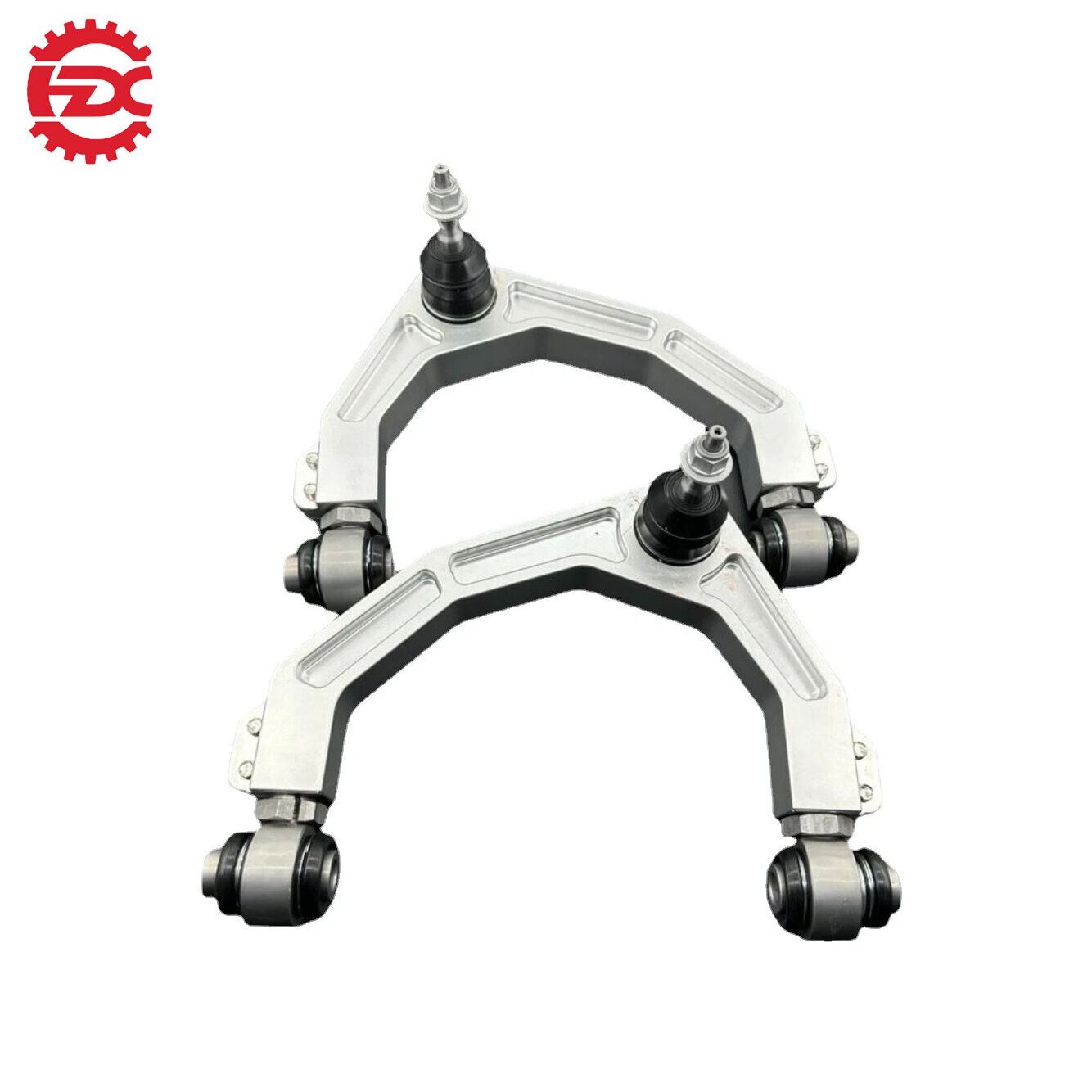
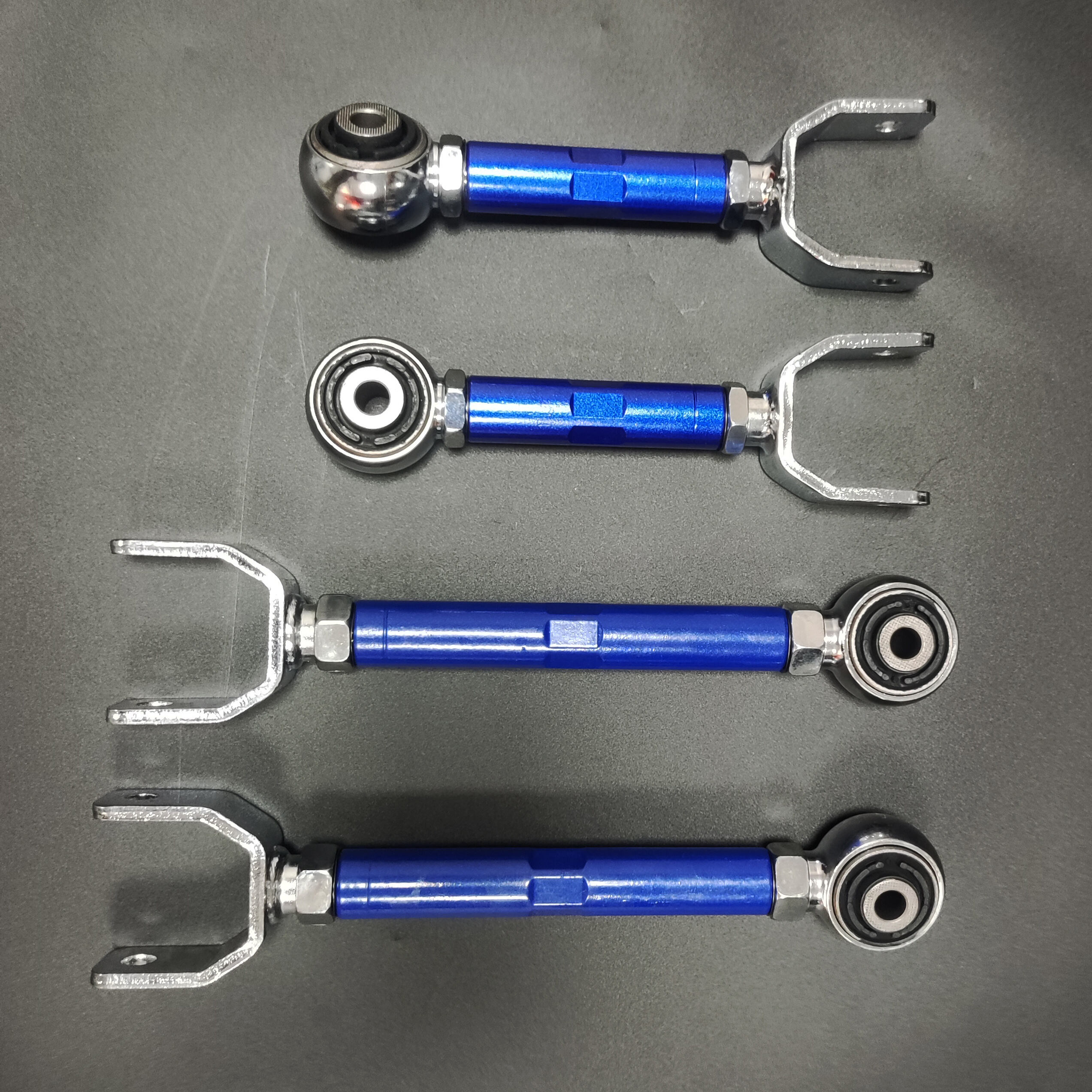
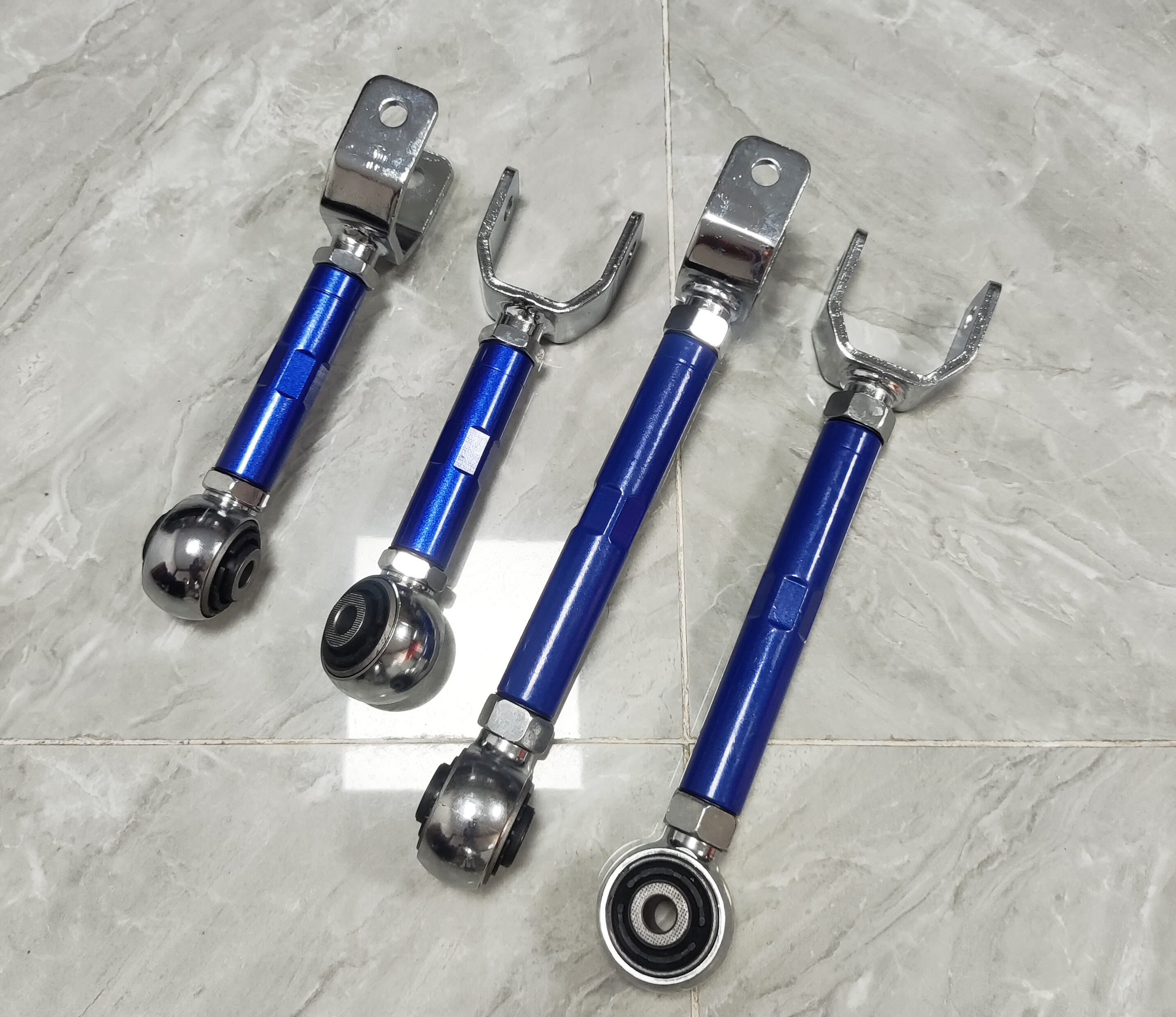
adjustable front upper control arms
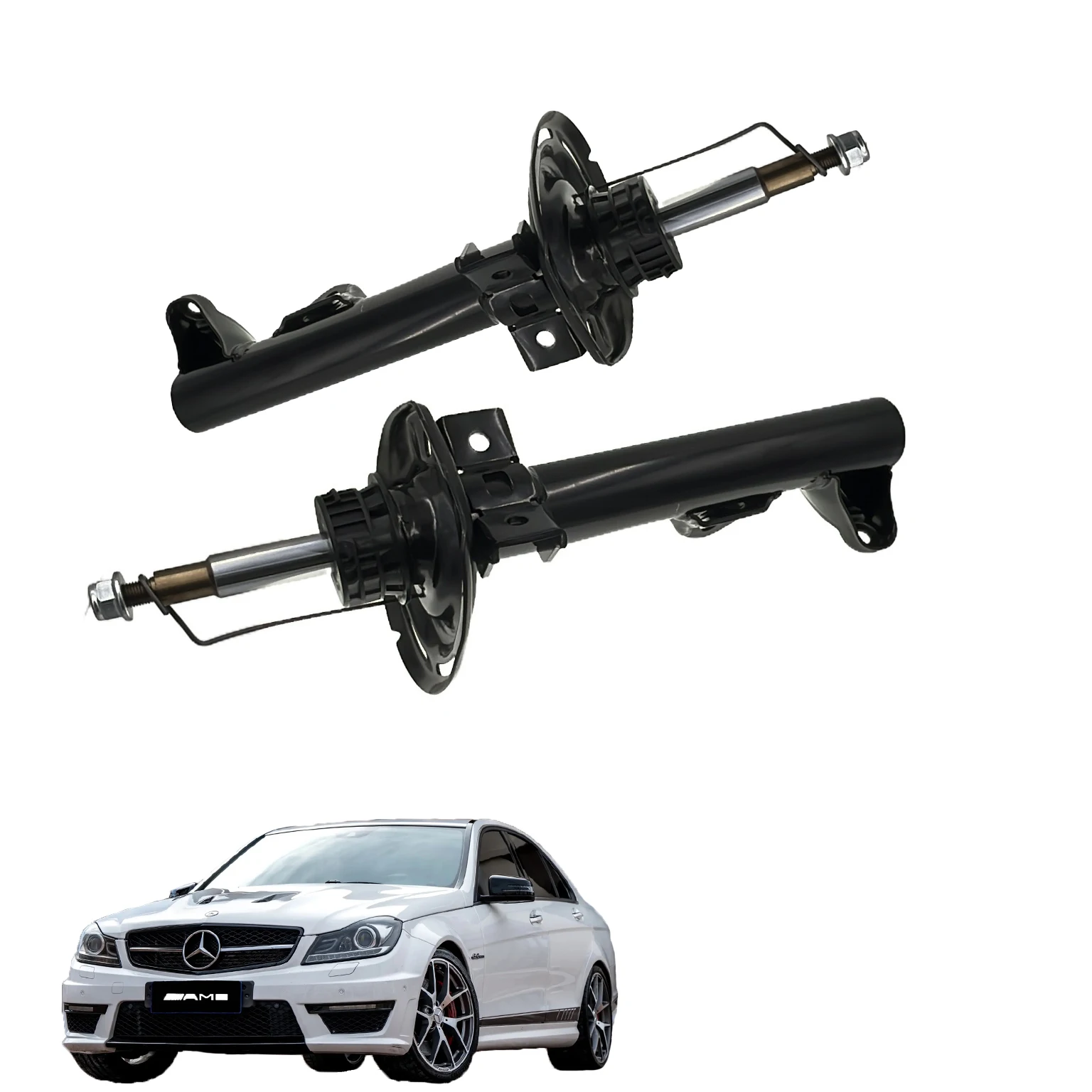
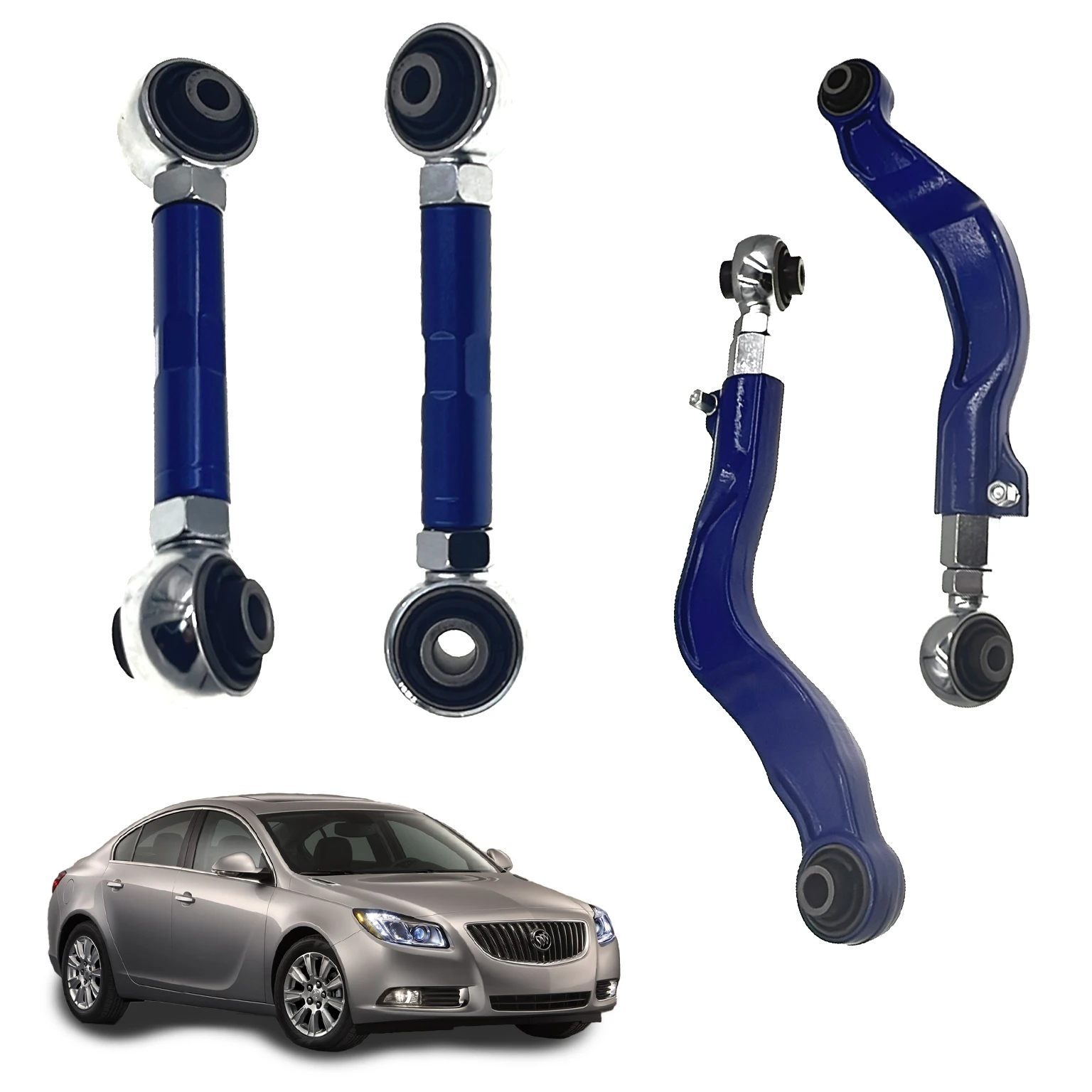
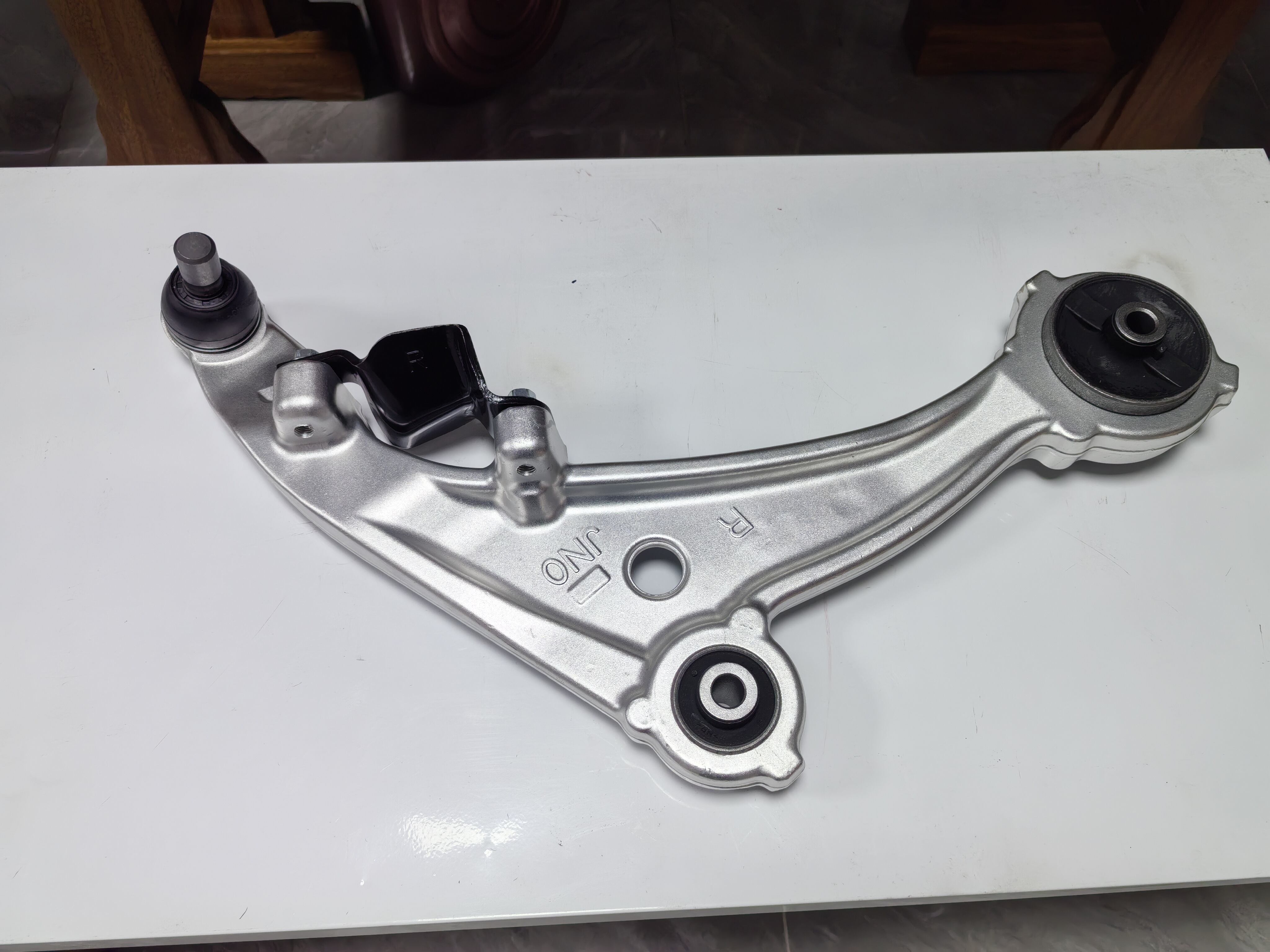
Adjustable front upper control arms represent a critical component in modern vehicle suspension systems, serving as the vital link between the vehicle's frame and the front wheels. These sophisticated automotive parts control the vertical movement of the wheels while maintaining proper alignment and steering geometry. Unlike standard fixed control arms, adjustable front upper control arms feature variable-length mechanisms that allow precise customization of suspension geometry to meet specific driving requirements and vehicle modifications. The primary function of adjustable front upper control arms involves managing wheel alignment parameters, particularly camber and caster angles, which directly impact tire wear, handling characteristics, and overall vehicle performance. These components utilize advanced engineering materials such as forged aluminum, high-strength steel, or lightweight composite materials to withstand the substantial forces encountered during driving while maintaining dimensional stability under various load conditions. The technological features of adjustable front upper control arms include precision-machined adjustment mechanisms, typically incorporating threaded rod ends or eccentric bushings that enable fine-tuning of suspension geometry. Many modern designs incorporate polyurethane or spherical bearings that provide superior durability and reduced maintenance compared to traditional rubber bushings. The adjustment range typically spans several degrees of camber correction, allowing technicians to compensate for vehicle modifications, wear-related changes, or manufacturing tolerances. Applications for adjustable front upper control arms extend across various automotive segments, including performance vehicles, off-road trucks, lowered cars, and racing applications. These components prove particularly valuable when vehicles undergo suspension modifications, wheel size changes, or ride height adjustments that alter the original suspension geometry. Professional racing teams frequently employ adjustable front upper control arms to fine-tune handling characteristics for specific track conditions, while enthusiasts use them to optimize their vehicles for particular driving styles or performance goals.

 EN
EN